

Amazon’s 'Butterfly' Is Pure, Uncut Dad Show
“Fly like a butterfly, sting like a bee” –Andrew Cuomo

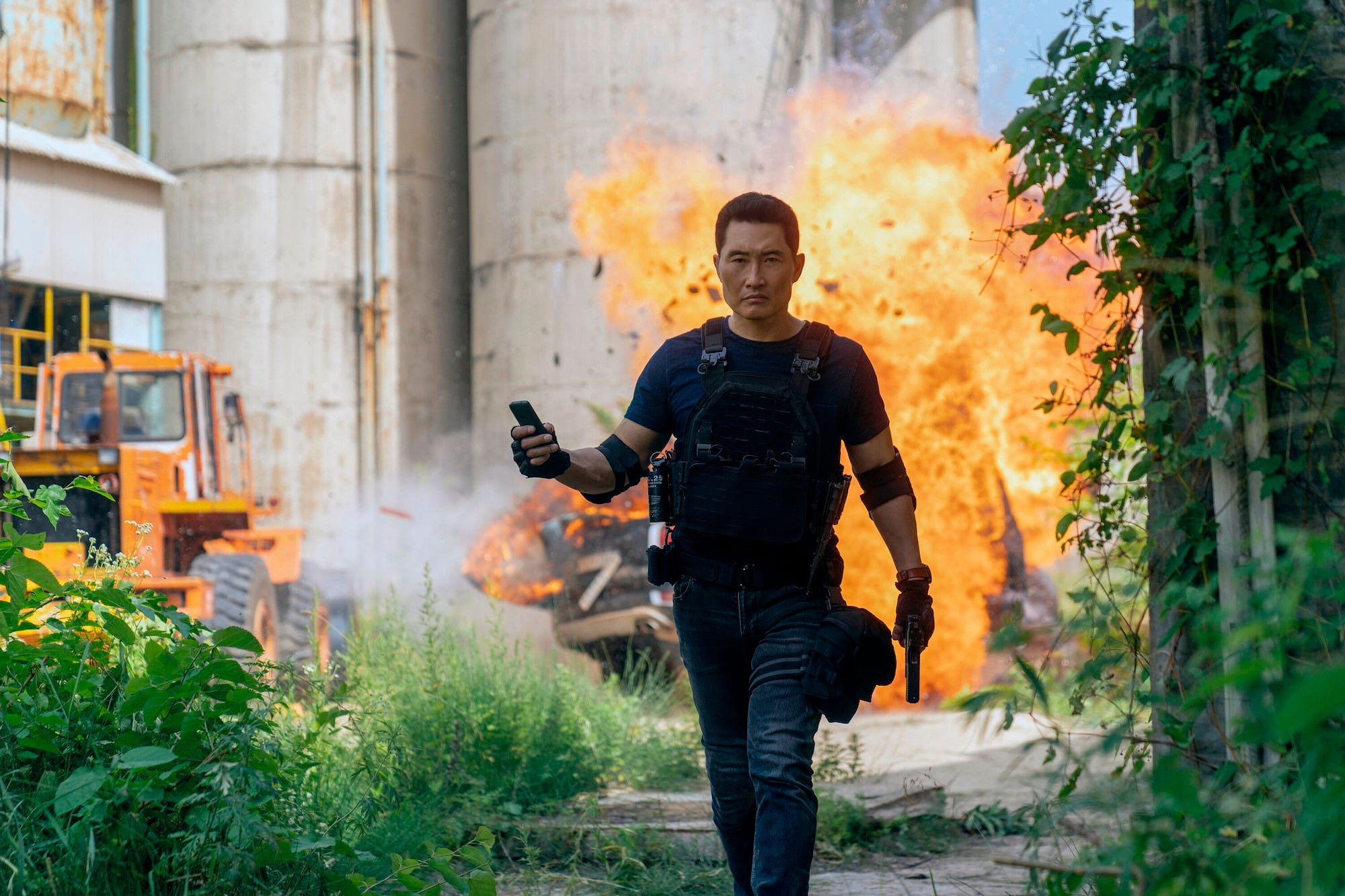
There are a lot of elements that I consider when deciding if something qualifies as a Dad Show. There are a lot of subgenres and overlapping pieces with non-Dad Shows. A show about an antihero isn’t necessarily a Dad Show, but a lot of Dad Shows are about antiheroes. It’s almost like there’s a spectrum of Dad Show-ness, with The Summer I Turned Pretty at the farthest end and Reacher at the closest, with Mad Men a little past the middle (antihero who’s good at his job, but he’s not a killer).
Pure Dad Shows are relatively rare. These are shows that have no prestige aspirations (not that they’re bad, necessarily, they just aren’t trying to win Emmys or be elevated versions of their genre). They prioritize action over character. They’re meat-and-potatoes, middle-of-the-road, no-frills, or any other cliche you’d use to describe something in its most essential form.
Spy thriller Butterfly, now streaming on Prime Video, is a pure Dad Show.
It comes from Amazon, the #1 producer of Dad Shows. It stars broadcast TV favorite Daniel Dae Kim as a spy-assassin trying to repair his relationship with his daughter, who is also a spy-assassin. Dad Shows don’t usually put fatherhood so directly in the foreground. It’s also — and I say this with affection and appreciation — pretty dumb. The dialogue is relentlessly expository, the characterization is inconsistent, and the cliches are ever-present. If you’re looking for an intellectually stimulating show, look elsewhere. But if you’re looking for a show with two very entertaining action sequences per episode, Butterfly stings like a bee.
If this were a traditional, graded review, I’d have to give it a 6/10 or a B-, right on the cusp of being good or bad. But a 6/10 can mean different things in context. It can either mean a show is trying to be good and coming up short, or about as good as a bad show can be. Butterfly is the latter. A show that has dialogue like “You took my daughter. You took my life. Now it’s my turn to take something from you” can’t be good, but it can be fun. A 6/10 may be accurate, but it doesn’t tell the whole story. Because I thoroughly enjoyed every preposterous moment of Butterfly.
Daniel Dae Kim (Lost, Hawaii Five-O, producer of The Good Doctor) plays David Jung, an American former intelligence operative living in South Korea. He used to run a private intelligence company called Caddis, along with a ruthless businesswoman named Juno (Piper Perabo, another non-prestige TV veteran). Nine years ago, an operation went wrong, and he faked his own death so that the people after him wouldn’t harm his daughter Rebecca to get to him. He abandoned his daughter (whose mother was already dead, of course) in order to protect her. Juno took her in.
Now, Rebecca is grown up — she’s played by Reina Hardesty, who is so good at on-camera running that she could play Tom Cruise’s daughter — and has become Juno’s top operative, a cold-blooded killer who does things like assassinate the Russian ambassador with a poison cell phone. David does not want her to live the same kind of life he did, so he comes out of hiding to try to get her to leave Juno and be a family again. Rebecca, understandably, is pissed, but now that her dad’s alive, she doesn’t want him to die again, so they go on the run together and fight a lot of people in various train stations, junkyards, and RoboCop-esque generic industrial locations all over South Korea.

It’s cool to see Daniel Dae Kim, a likable guy on-screen and off, in a prominent lead role. Amazon is kind of derisively known for making “white guy with a gun” shows, which isn’t totally fair; Butterfly is an Asian guy with a gun show. The character Kim plays is kind of all over the place — the show can’t decide if it wants us to respect David for finally trying to do the right thing or think he’s truly an asshole for abandoning his daughter and then coming back into her life to try to get her to do what he wants — but Kim is a charismatic performer and a credible action hero. He can hold his own in hand-to-hand fight scenes.
The action is what sells Butterfly. It’s not super crazy balls-to-the-wall action, but it’s pretty hard-hitting and practical. They set an actual stunt performer on fire, they don’t just do it on a computer. I’ll put it this way: you feel that Butterfly is not a premium quality show during dramatic scenes, but you don’t during action scenes. I’d say it even outclasses some action shows with much higher budgets. On an enjoyment level, Butterfly is better than Citadel, Amazon’s other dumb private spy agency show, and costs a fraction as much to produce.
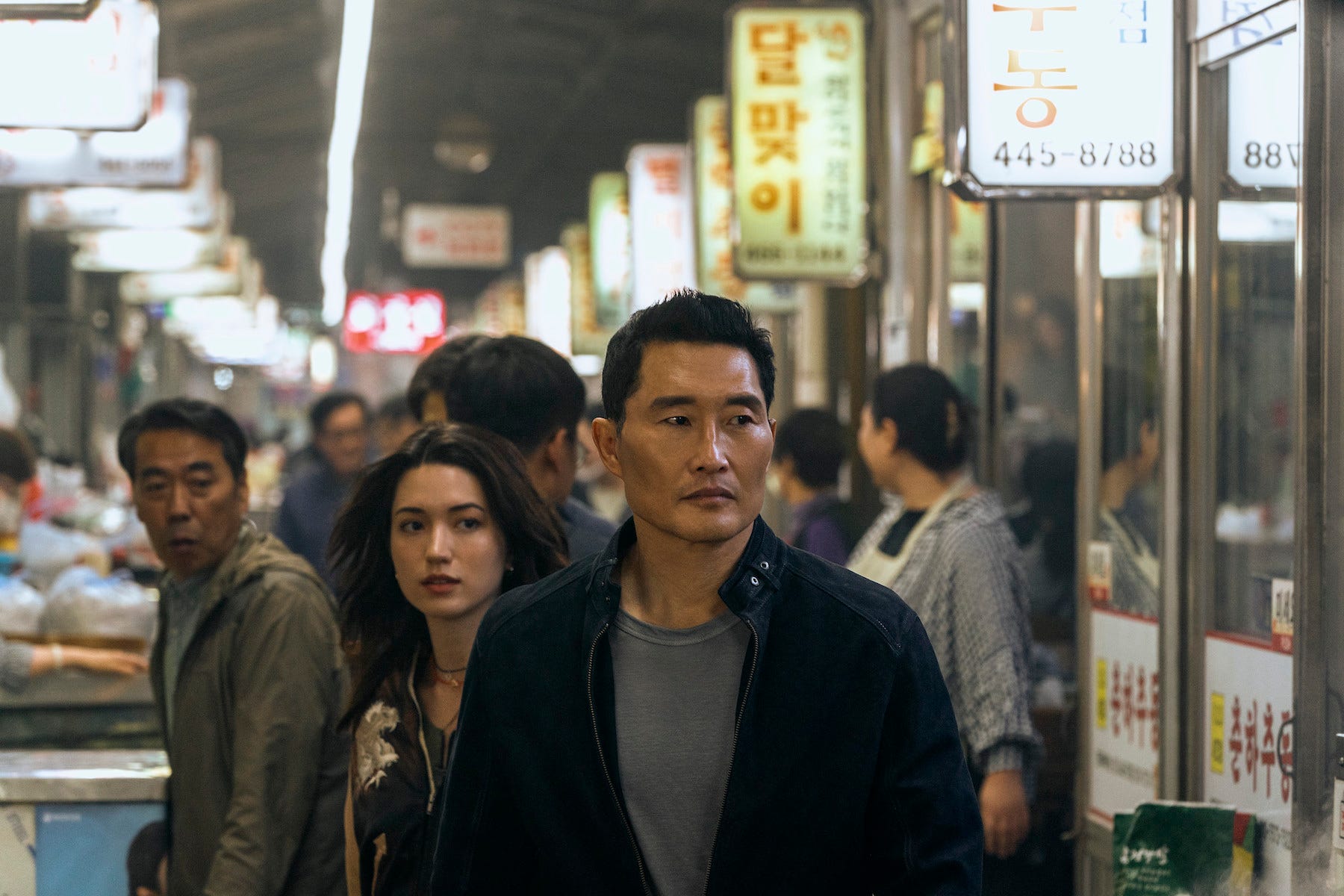
Following shows like On Call and Countdown, Butterfly is the latest in a string of broadcast-style dramas on Prime Video. If not for some F-words, it could be on NBC. Spiritually, it’s an NBC show — NBC action dramas tend to be more character-driven than CBS and less romantic than ABC (think The Blacklist and Blindspot). And I swear I didn’t look this up before I had the thought that this specifically feels like an NBC show, but Butterfly co-creator Ken Woodruff’s (he developed it with Steph Cha from a graphic novel by Arash Amel) previous creator credit is the NBC thriller The Enemy Within — though he’s also worked on Warner Bros. shows for Fox (Gotham) and CBS (The Mentalist), too. This is all to say, he is an experienced writer of this kind of thing. (And to be fair to ABC, as a spy show with a troubled father-daughter relationship, there’s a lot of Alias in Butterfly’s DNA, too.)
If Butterfly were a serious show, it would be about David’s selfishness, and the psychological effects of his dangerous career on himself and his family. This is gestured at in the show in the bluntest possible terms — “You’re a spy, and a killer. You can’t have this life without fucking up your family,” Rebecca says, and he answers “You’re right, people like me shouldn’t have children” — but this ain’t John le Carré. It ain’t even Tom Clancy. It ain’t that deep. But there are enough good moments peppered throughout to keep it from getting so dumb you tune out. Late in the season, Rebecca, unprompted, asks another professional killer, “Do you ever dream about them?”
He doesn’t understand what she’s asking, but then the camera refocuses on her for a second, and he gets it at the same time the audience does. “No,” he says. “I don’t dream.” There aren’t a ton of moments that make your ears perk up like that, but there are enough to let you know that the people making this show know what they’re doing. Competence is important in Dad Shows.
I think spy like action shows should be rated on the Burn Notice scale.