

Tubi Noir: 'Johnny O'Clock'
It's time to watch film noir on Tubi

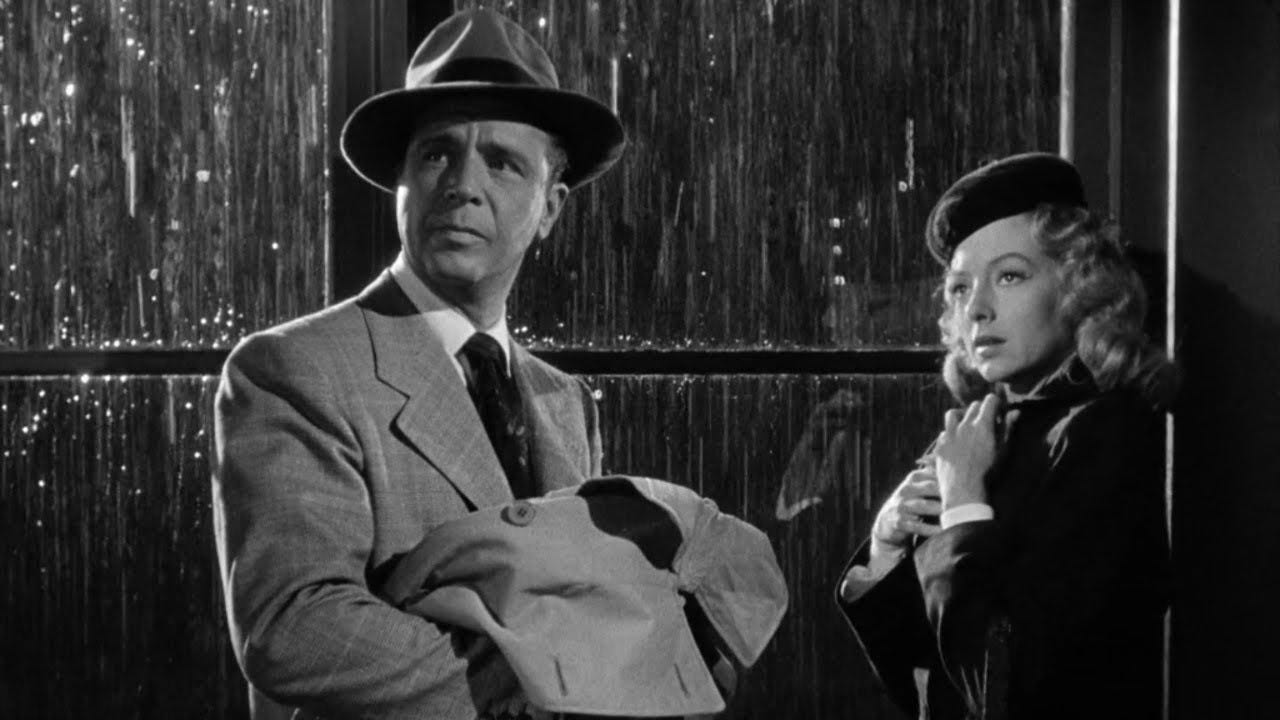
Welcome to Tubi Noir, a new feature on Dad Shows. The premise is very simple — I love film noir, and I love the free streaming service Tubi. So I’m combining these things I enjoy into occasional reviews of noir movies from the ‘40s and ‘50s golden age. The phrase “Tubi noir” popped into my head, and I felt compelled to bring it into existence. This month happens to be Noir-vember, which isn’t why I’m doing this now, but works out nicely.
Our first Tubi Noir entry is the 1947’s Johnny O’Clock, a rascally crime drama from writer-director Robert Rossen. Dick Powell stars as the dapper title character, a manager and junior partner in an illegal casino run by Guido Marchettis, played by Thomas Gomez more ethnically ambiguously than the character’s name suggests. Johnny O’Clock’s own peculiar moniker is never really explained. My assumption is that it’s because he’s always right on time, but that’s just my own interpretation, and other characters take his last name at face value. When people call him “Mr. O’Clock,” it’s funny every time.
The plot is one of those convoluted noir plots that gets so hard to follow that you eventually give up and just enjoy the atmosphere. It goes something like this: Johnny had a secret affair with the boss’ wife, and she’s still in love with him. Meanwhile, a hat check girl at the casino who was dating a crooked cop (who protects the casino and is trying to muscle Johnny out of it) is found dead — murdered, but staged to look like a suicide. The dead woman’s sister comes looking for answers, and she and Johnny fall in love. There’s also a detective investigating murders linked to the casino who’s pressuring Johnny to cooperate with him. Johnny’s under a lot of stress, and he wants to get out, but this life is not something he can just walk away from.
There are a lot of threads and they get hopelessly tangled, but the point of this movie isn’t the plot, it’s Powell’s cool, charismatic anti-hero performance and Rossen’s snappy dialogue (“What’ll I do, Johnny?” “Blow your nose and wipe your eyes in the order named.”) Lee J. Cobb gives a standout supporting performance as the detective Inspector Koch, playing him with a lived-in weariness that feels uncommonly natural for performances from this era.
With its casino setting and themes of forbidden romance, Johnny O’Clock bears some similarities to Gilda, which was released the previous year also by Columbia Pictures. Johnny isn’t quite as memorable as Gilda, which is why Gilda is a top-tier noir classic and Johnny is a “hidden classic of the genre,” as Richard Brody called it. But even a minor classic is still a classic, and the crisp, well-made Johnny O’Clock is as suave a noir as you’ll ever see.
Could it be remade today?
When I watch old noir movies, I like to imagine if they could get remade in a contemporary setting with their spirit left intact. And I actually don’t think Johnny O’Clock is a great candidate. Too many things about it are a little too old-fashioned, from Johnny’s rote and paternalistic romance with Nancy Hobson (Evelyn Keys, who has a very colorful Wikipedia biography) to its relative lack of sex and violence in the story — at least compared to Gilda, which is so tumescent by 1940s standards that it can barely contain itself.
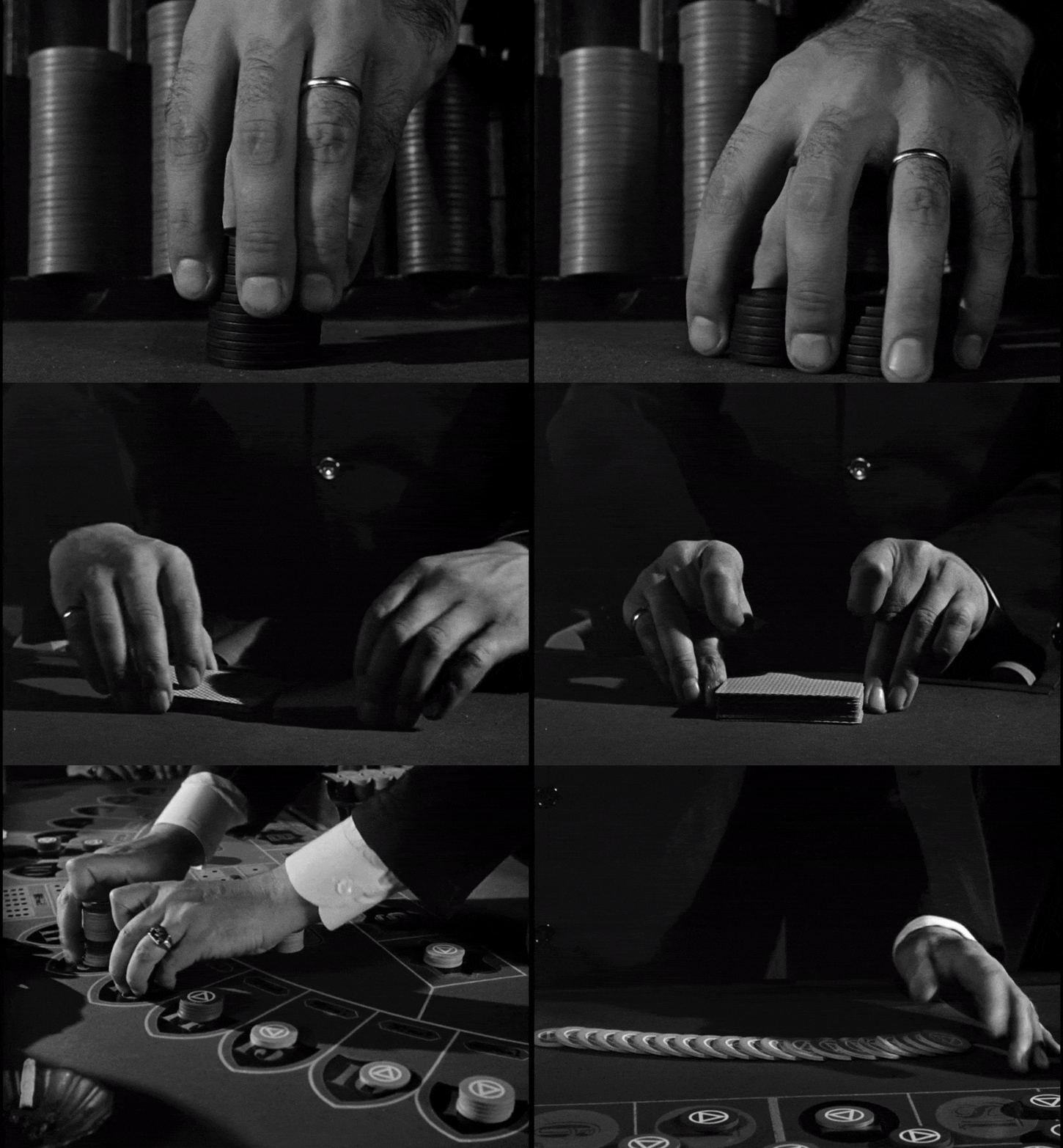
A memorable image
The camera admiringly lingering on the hands of casino dealers as they work.
Tubi’s synopsis
“A debonair but crooked casino operator finds himself precariously straddling both sides of the law while juggling women and a murder investigation.”
What’s next on Tubi Noir?
The 1955 cop-crime boss-dame love triangle thriller The Big Combo.
(This post is not affiliated with Tubi, I just genuinely love the service. It has so many great movies for free.)
I think you will love The Big Combo. I can't remember where I first saw it. Maybe The Criterion Channel. But it so stayed with me that I found the title theme on Amazon and bought it. And years later I got a restored version on Blu-Ray on eBay. It's definitely another "hidden" Noir gem, but property plot-driven; and rather peculiar for its time, as you'll soon see.
Great turn by Lee Van Cleef, too, who played many heavies in Hollywood crime thrillers before he found a home in Leone spaghetti westerns.