

'Marshals' and 'The Madison' Are Divergent Visions of What the Sheridanverse Can Be
One works better than the other

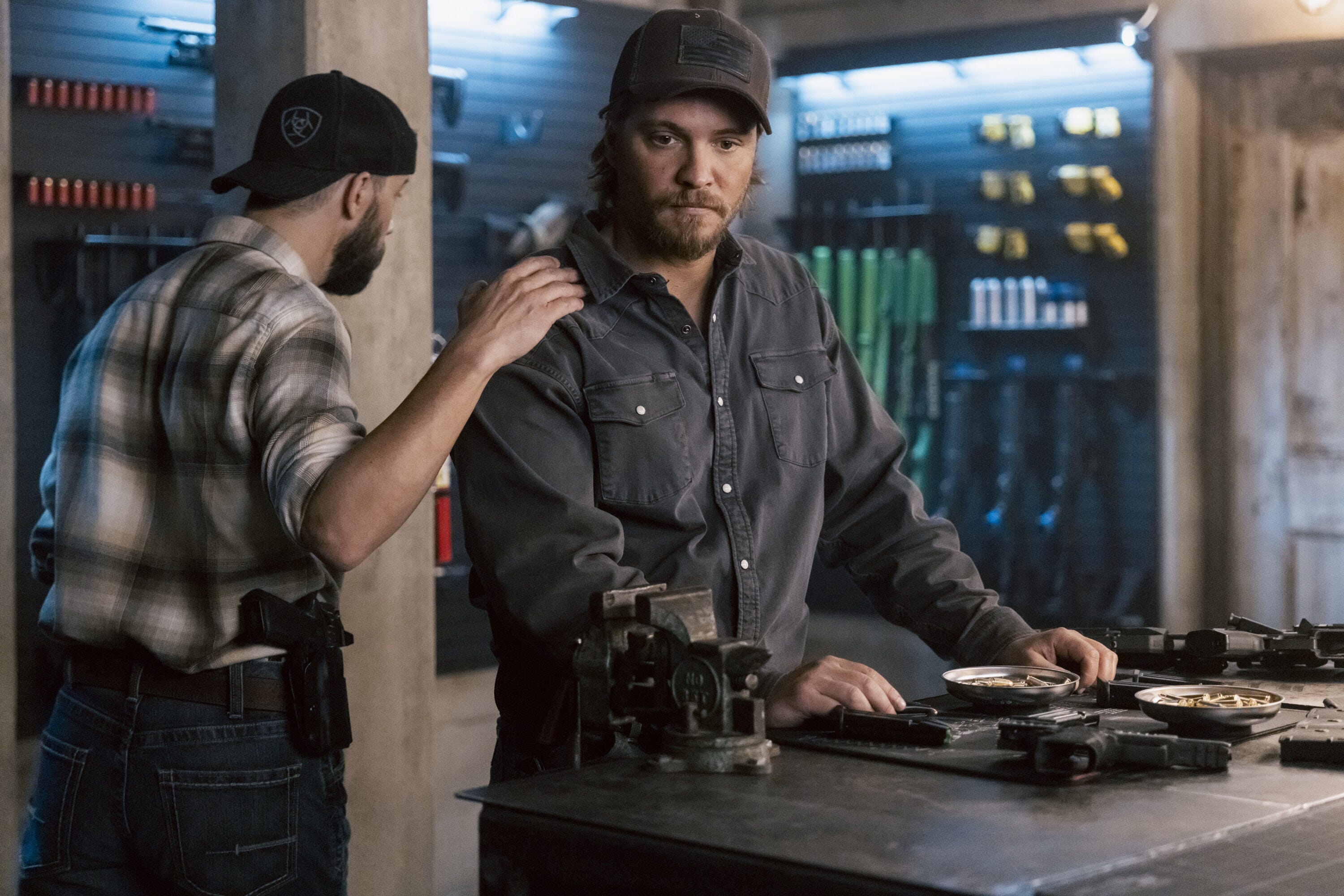
In the past few weeks, two new Taylor Sheridan-produced shows have premiered: Marshals, a Yellowstone spinoff on CBS starring Luke Grimes as Kayce Dutton; and The Madison, a standalone family drama on Paramount+ starring Michelle Pfeiffer. Both shows are different from anything else Sheridan has ever done, and demonstrate how his empire of shows and movies, which I call the Sheridanverse, can expand into different styles and formats. Marshals and The Madison also very different from each other. One is more successful at doing what it’s trying to do. Neither are among Sheridan’s best.
Previously, all of Sheridan’s shows had been some version of a macho soap, with tough guys (or gals) fighting their way through work problems and family problems. They’re emotionally over-the-top and unusually character-driven, with plot often taking a backseat to characters just vibing out and doing whatever Sheridan wants them to do. Marshals and The Madison change up the style a little bit. Marshals is a straight-ahead CBS procedural, and The Madison is not macho. It’s Sheridan’s version of a show for women. I saw a review that compared it to Nicholas Sparks and Virgin River.
While Marshals is based on Sheridan’s characters, he’s not the credited creator; that’s a guy named Spencer Hudnut, who told me that Sheridan is not involved day-to-day when I interviewed for him Parade. I don’t think Sheridan has it in him to do what Marshals is, and he definitely wouldn’t want to. It’s a fast-paced, case-of-the-week CBS procedural, with multiple action scenes per episode. As a procedural, Marshals is plot-driven by necessity. It’s part of the structure of the genre. Characters speak in expository dialogue, something Sheridan goes out of his way to avoid. The style is a big change from Yellowstone, which mostly consisted of philosophical speeches, long-range footage of cowboys roping horses, and Beth Dutton verbally and physically abusing people. It’s also a change from the style he’s gotten into with Landman, where there isn’t really a traditional plot at all, and stuff is just kinda happening. Stuff never just happens on Marshals. Every beat is in service of the next one.
Marshals has as much in common with Hudnut’s previous show SEAL Team as it does with Yellowstone. The fact that Kayce used to be a Navy SEAL didn’t really fit on Yellowstone, and the show kinda stopped talking about that part of his backstory as it went on. It was mostly just to explain why he was so good at killing people. But Marshals leans into the SEAL thing. He’s recruited into the Marshals Service by his former leader in the Teams, and uses his skills as a SEAL and a rancher to catch bad guys in Montana. It gives him something to do after his wife dies off-screen and he’s kind of adrift in life. Marshals features a lot of jargony operator talk and a lot less profanely poetic dialogue than Yellowstone. It has two staples of procedurals — the team of colorful characters who all play a unique role, and the base of operations where the team conducts meetings and stuff. This base is often something entertainingly gimmicky — on The Blacklist, the FBI task force operated out of a former post office, for example — and Marshals has a particularly delightful one. The Marshals’ local headquarters is the former processing plant for an old mine. When I saw that in the pilot, I knew I was watching a true procedural.
When I first heard that they were spinning off Yellowstone into a CBS procedural, I was a little skeptical. I didn’t know how it would work, because Sheridan writes in such an un-procedural way. But when I finally saw it, I was impressed, because they did it. They combined a toned-down version of Yellowstone‘s character-driven style with a CBS procedural. There’s less poetic dialogue and non-narrative atmospheric footage of cowboys and landscapes, but there’s some. Kayce gets at least one big emotional moment per episode. His motives are complex bordering on anti-heroic, and you never know exactly what he’s going to do. Hudnut told me that his goal was to make a more character-driven procedural than usual, and he succeeded.
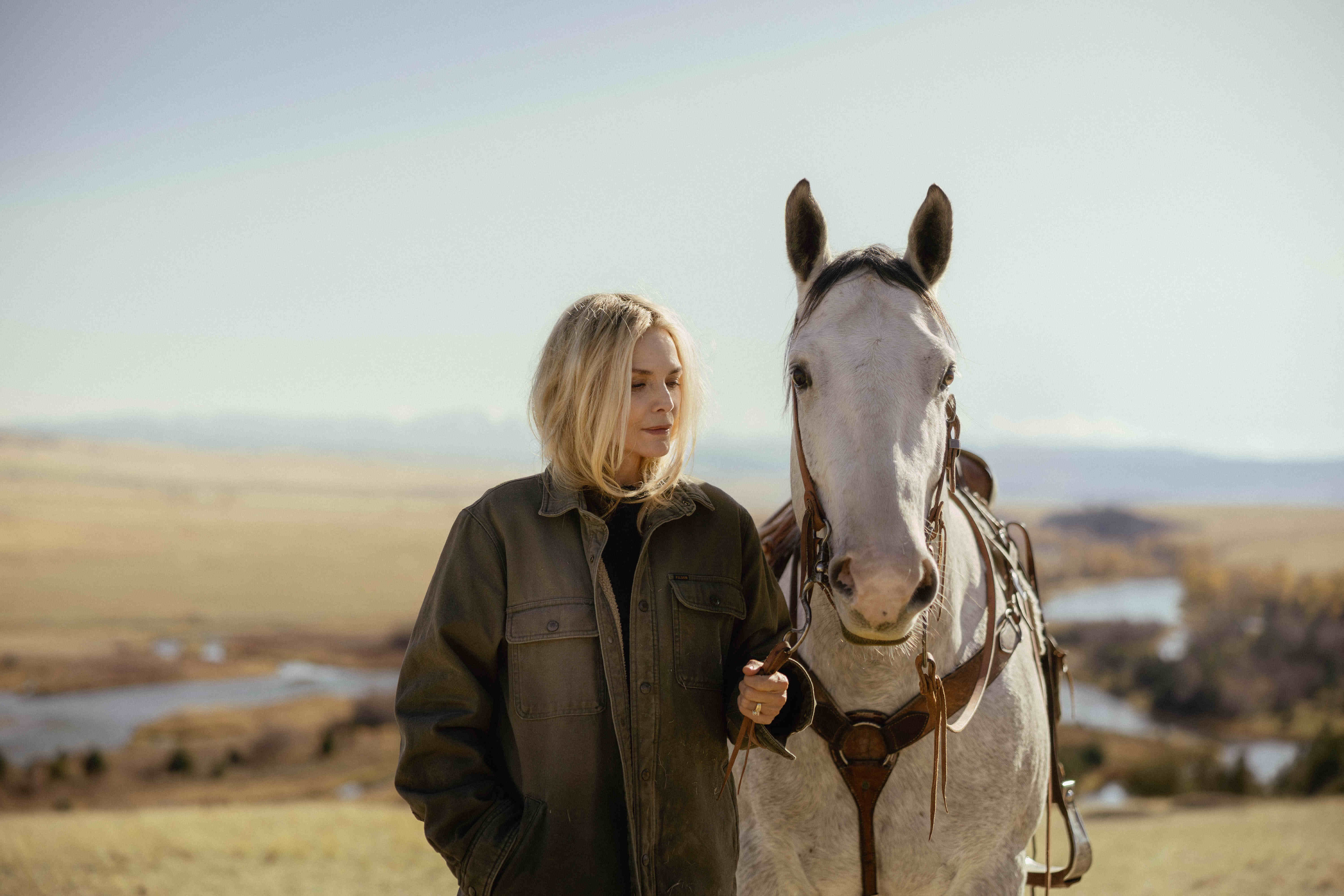
Where Marshals is doing a straightforward version of a Sheridan show, The Madison is experimenting with an even more abstract version. It takes the plotless, “stuff just kinda happening” approach from Landman and cranks it up — or rather, slows it down. It’s about a family from New York City, led by matriarch Michelle Pfeiffer, grieving the death of patriarch Kurt Russell in Montana, the place he truly loved. As I wrote in my review for TV Guide, there’s little in the way of conflict. Characters don’t really have concrete goals. The things they’re grappling with are internal, and don’t get externalized in a satisfying way. It’s just pure character-driven emotion, without plot getting in the way. Sheridan’s idea of what women want to watch seems to be disjointed scenes of melodrama with the tiniest threads of narrative tissue connecting them. It’s classic Sheridan, however, in how much time the characters spend insulting each other. You could call it tough love, or you could call it mean.
Sheridan also indulges in the most eye-rolling rural supremacy bullshit he’s ever done in this show. There are constant, constant references to how awful New York is and how crazy anyone is to live there and how much better life is among the noble savages of Montana. It’s red meat for his core audience of people who live in places where they have Tractor Supply. I say that as a fan of Sheridan’s work, but it’s true. It’s just as condescending as it would be in the opposite direction, of smug coastal elites judging simple country folk. To me, it comes off as a juvenile lack of understanding that different people like different things.
The scene that made me yell “shut the fuck up” at my TV comes in the second batch of episodes, which will be released on Saturday1. Michelle Pfeiffer is back in Manhattan, and she goes into a hipster coffee shop. The barista, whose pronouns are probably they/them/this/that/the other, asks her if she wants oat or soy milk in her drink. I didn’t write down exactly what Pfeiffer says in response, but it was something to the effect of, “What has happened to this country that I, a normal person, have to ask for regular-ass whole milk instead of woke milk?” And believe me when I tell you that it’s a pointless scene. It has no narrative purpose whatsoever. It’s just a complaint about city life from a guy who doesn’t even know that whole milk is, in fact, the default wherever you are. Every barista in the country says “Whole milk OK?” in the exact same cadence if you don’t specify what kind of milk you want.
I give Sheridan some credit for making a show where he asks his audience to have empathy for rich New Yorkers, though. Having them feel pain like regular people is a pretty bold choice for the Sheridanverse.
Marshals and The Madison show that there’s still room for the Sheridanverse to expand. He’s trying new things and trying to reach new people. But I do think The Madison, which Sheridan wrote by himself, shows that he has finally spread himself too thin, and for the first time the quality is suffering to a point where his shows don’t automatically hit. I don’t think he’s lost his touch or anything, but he’s not spending enough time making sure his scripts work. He should have realized that The Madison is a conflict-free bore before cameras rolled. I declared that we were at peak Taylor Sheridan about a year and a half ago, and now we’re fully in the post-peak era.
The six-episode season is being released in two three-episode chunks on two successive Saturdays. It’s a very weird release schedule that makes me wonder if Paramount is burying The Madison to some degree, even though a second season has already been filmed.
The Madison is boring - and script weak. City “girls” take off w no equipment or sun protection to find on their own the place ‘dad’ loved only accessible by pack horse?? Implausible at best. I turned it off at that point.