

Men on Fire
Evaluating the three versions of 'Man on Fire'

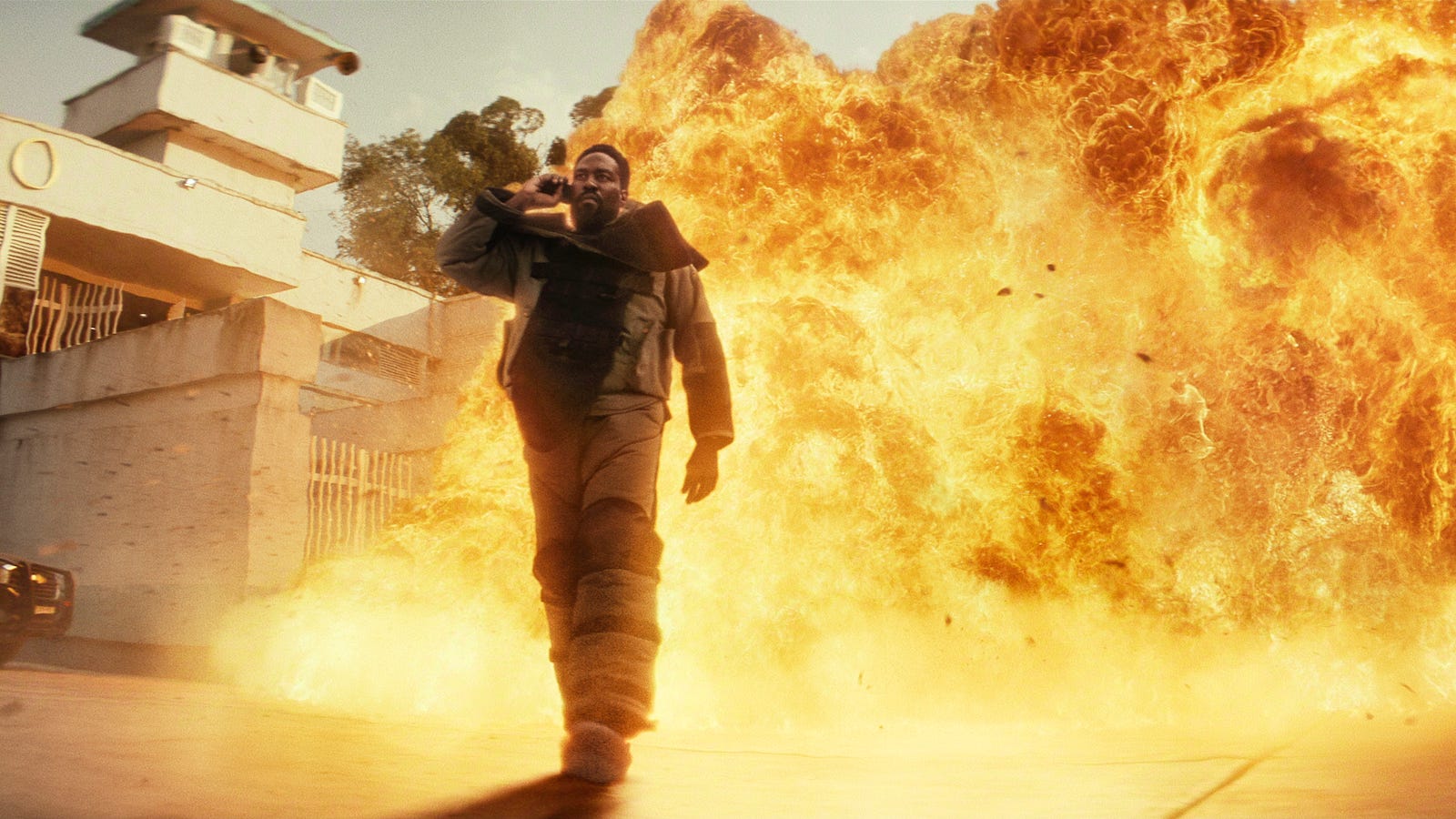
For a book that doesn’t get talked about as a classic, Man on Fire has proven to be very durable source material. A.J. Quinnell’s 1980 novel has been adapted three times, in 1987, 2004, and 2026. The latest adaptation, a Netflix series, is streaming now. I haven’t read the book, but I have watched all three adaptations. The new adaptation is clearly the least faithful, and arguably the weakest. It’s very clear which is the best. It’s the one you’re thinking of — the one with Denzel Washington.
Broadly speaking, every version of Man on Fire is about a broken man finding a reason to live. At the start, John Creasy is a former CIA agent who is shellshocked from the things he’s seen and done and doesn’t care if he lives or dies. His friend and former team leader Paul Rayburn gets him a job to try to help him out. This setup is the same in all three versions, but from there the new version diverges greatly. It’s actually less of an adaptation than a new story that keeps a couple of characters and themes. The different versions are like a folktale that exists in different countries. Some versions are similar to each other, some are very different.
In the first two versions, Creasy works as a bodyguard for a wealthy family in a dangerous country, and in the third he’s doing security for the president of Brazil. In all three versions, he becomes responsible for the protection and care of a young girl, and it is through this that he finds redemption. And in all three versions, he goes on a revenge mission.
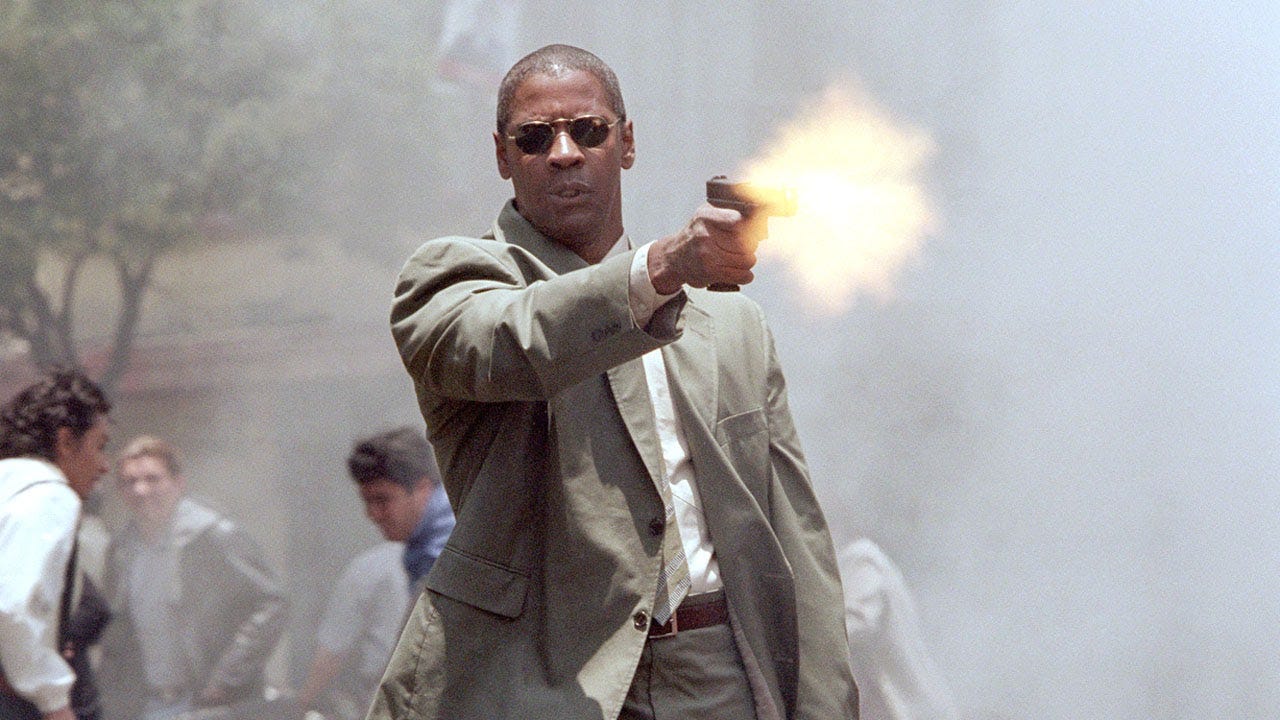
The main reason why the Denzel version is the best is because it’s the one that best establishes the emotional stakes of the story. Almost the whole first half of the movie is devoted to building Creasy’s relationship with little Dakota Fanning. At first he resists caring about her, but she wins him over by being such a cute, nice kid. The movie takes the time to make sure you care about them, so when she gets kidnapped, it’s very upsetting — and the extreme violence he perpetrates while trying to find her is understandable. He’s a classic Dad Show antihero, a Cool Guy Who’s Also a Bad Guy.
In the new version, Creasy is played by Yahya Abdul-Mateen II, who isn’t as charismatic as Denzel. No one is, of course, but Abdul-Mateen’s take on Creasy doesn’t have much personality at all, just a clenched jaw and little sunglasses. And — as I wrote in my review for TV Guide — the show doesn’t establish his relationship with the girl nearly as well. On the show, the girl, played by the ambiguously accented Billie Boullet, is much older, and she and Creasy don’t have a relationship at all before shit pops off and they’re fated together. He’s not searching for the people who kidnapped her, he’s trying to protect her from people trying to kill her. He’s also —due to a massive story change I won’t get into because it’s actually a spoiler if you decide to watch the show — trying to avenge a totally different person whose loss isn’t nearly as impactful. It’s harder to get onboard with a revenge plot for an adult person we barely spend time with who knew what they were getting into than a plot about punishing people who would harm an innocent little girl. As a result of these changes, when Abdul-Mateen’s Creasy does things like drip sulfuric acid onto a guy’s face to torture him and sew a bomb into his chest to control him, he’s not really a Cool Guy, just a Bad Guy.
Like I said, that’s the main reason why the Denzel version is better, but it’s better than the other two in most ways. It was directed by the late Tony Scott, who had that unique hyperkinetic style influenced by music videos and commercials, and it looks so cool. It also has the best ending of the three.
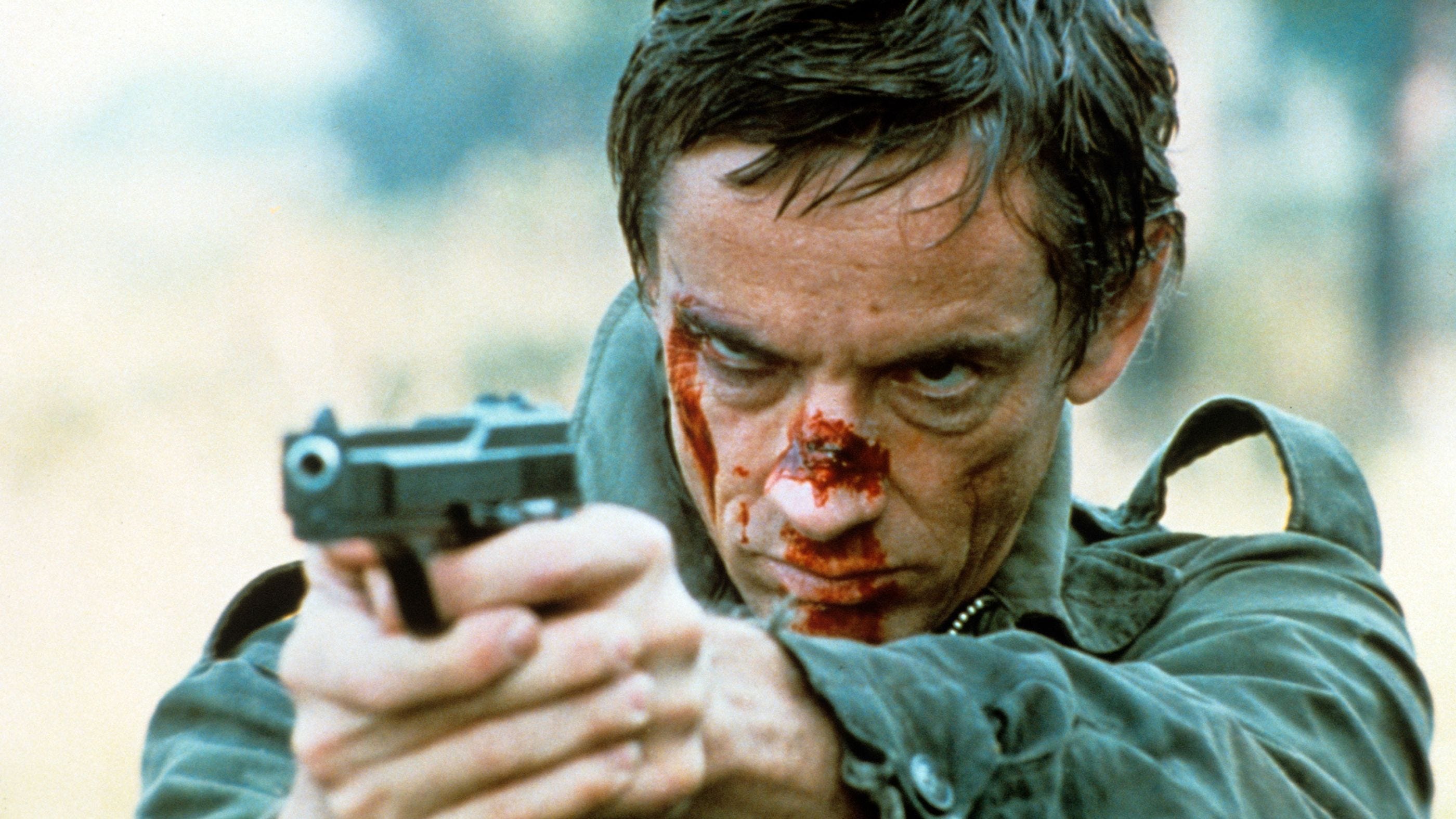
The best thing about the original 1987 version with Scott Glenn is the moody, atmospheric cinematography. It’s set in Italy during the Years of Lead, and it’s shot like a European Michael Mann movie. They sprayed the streets of Rome with water so that they glistened under the lights. But the girl isn’t as endearing as Dakota Fanning, the plot is rushed (apparently the runtime from the original cut got halved, and it shows), and the ending is confusing. It’s a rare case where it’s a good thing that they took another swing at an adaptation, because they did it better the second time. The third time not as much.
The new show is actually fairly decent and is different enough to justify its existence. But there’s nothing artistically memorable about it, like the noirish vibe of the Scott Glenn one (Scott Glenn is always great, huge shoutout to him, he was in The Silence of the Lambs) or the maximalism of the Denzel/Tony Scott joint. I predict that people will watch the Man on Fire show, but it will not be a hit, because there’s nothing to latch onto. There are no moments that people will have to talk about. It’s not a boring show, but it’s not crazy enough. There’s no Reacher throwing Robert Patrick out of a helicopter. It is definitely a Dad Show, though. The purest Dad Show to come along in months. It’s just pure stoic pulp.
“The Denzel version is better” can probably be applied to any project he’s ever been in.
Except Highest 2 Lowest.
Huge shoutout to Scott Glenn